


It is well known that birds possess a strong instinct for nest-building. Relying solely on deterrents like bird spikes to "block" nesting sites often drives birds to build nests in more dangerous, live electrical areas.
Artificial bird nests, also known as ecological power grid bird attraction devices or power grid bird prevention cages, are commonly used equipment in power grid bird damage prevention. Properly installed bird nests provide superior resting environments within safe zones of towers (above non-conductive lines and on level terrain), guiding birds away from high-voltage danger zones. This effectively reduces frequent circuit trips caused by bird strikes and minimizes the impact of "repellent-type" bird deterrents on avian activity, significantly alleviating bird-power line conflicts. Next, let's delve into the details of this compact device.
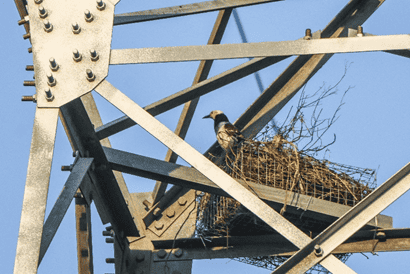
Artificial bird nests are typically installed on non-energized sections of transmission towers, where bird activity is safe and does not cause power line accidents. Through scientific planning and proper guidance, birds are deterred from "danger zones" within the power grid and directed to nest in secure areas. This allows birds to thrive in a safer, more stable environment while ensuring grid operations remain unaffected by avian activity.
Shenzhen Zhenquniao Technology's Artificial Bird Nest ZQN-DL-NL is crafted from corrosion-resistant, weather-resistant stainless steel, ensuring long-term durability in outdoor environments. The entire nest is formed by spot welding five stainless steel frames together, with five additional stainless steel mesh panels welded inside. This robust and stable structure prevents strong winds from scattering the nest, avoiding power line failures caused by loose nesting materials. Additionally, the sturdy mesh prevents accidental falls of young birds, ensuring safer habitation for avian species.
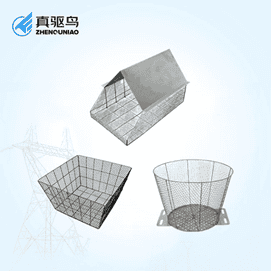
As seen above, constructing artificial bird nests is an effective solution to the conflict between birds and power grids. During installation, multiple factors must be considered, such as selecting an appropriate location to ensure bird activity does not interfere with normal grid operations. Additionally, bird cage types and dimensions should be selected based on avian habits and requirements to attract birds for habitation. Over time, "anchoring" birds within these designated artificial nesting boxes effectively controls the direction of droppings, thereby resolving insulator flashover faults caused by downward-flowing bird waste!


