


When walking through rural fields or deep in the mountains, you’ll always see rows of power transmission towers soaring high into the sky. To many people, they’re a symbol of modern civilization; but to birds, those crossarms and supports are practically natural homes—not only do they offer great views and stable footing, but they’re also free from natural predators. However, for us power maintenance workers, these adorable birds can sometimes be a real headache.
Birds aren’t particularly picky when building their nests. The twigs, thin wires, and even plastic ropes they gather—once they fall onto power lines—can instantly cause a short circuit and trip the circuit breaker. Even more unpredictable is bird droppings. These droppings are highly corrosive, and if they accumulate on shiny insulators, they can cause flashover failures during humid weather.

Today, Shenzhen Zhenquniao Technology will introduce you to the Electric Ultrasonic Bird Repeller.
During the bird-repelling process, it emits an ultrasonic sound whose frequency continuously fluctuates between 16 kHz and 25 kHz. This frequency was chosen with great care: since the upper limit of human hearing is generally 20 kHz, we can’t hear this sound at all, so it doesn’t disturb passersby or nearby residents in the slightest. But to birds with their keen hearing, this sound is like someone constantly blowing a shrill whistle right next to their ears—or the incessant noise of a power drill that won’t turn off.
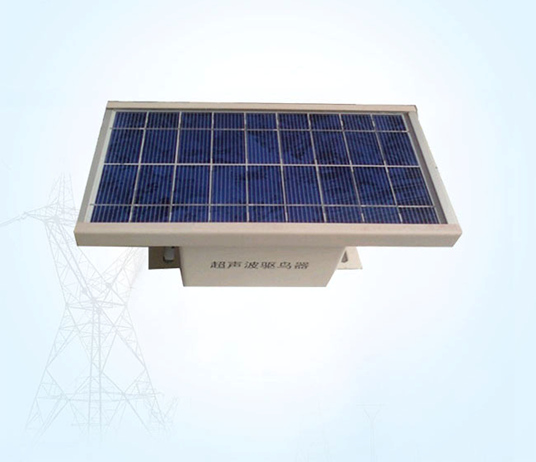
Under this constant “psychological disturbance,” birds perceive the area as extremely unstable and feel uneasy, so they naturally become reluctant to nest or linger there. Its protective range covers an area of about 15 meters around it, as if an invisible “hemispherical shield” were extended around the power tower.
To combat adaptation, the ultrasonic device has pulled out its secret weapon. Its frequency isn’t fixed; instead, it constantly shifts like a variation. Even more ingenious is its intermittent operation: 3 minutes on, 5 minutes off. This unpredictable rhythm keeps the birds guessing. Just as they’re about to return for a rest, the sound starts up again; just as they’re getting used to the current tone, it changes. Over time, this approach naturally ensures that the bird-repelling effect is sustained.


