


Bird activity on power transmission lines has long been a persistent problem that threatens the stable operation of the power grid. When debris such as bird droppings, twigs used for nesting, or wire falls near insulator strings, it can easily cause short circuits and tripped circuit breakers, disrupting normal power supply. To address this issue, Shenzhen Zhenqu Bird Control has introduced a device called the Power Line Bird-Proof Barrier, which is proving increasingly effective on a growing number of transmission towers.
Electrical bird-proof barriers are not complicated. Installed on the crossarms above insulator strings, they essentially serve as a physical barrier. Bird droppings and nesting materials are kept away from the equipment, preventing contact with live parts and thereby reducing the risk of circuit tripping. With their increasingly widespread use, they have become a proven and reliable method for preventing bird-related damage.
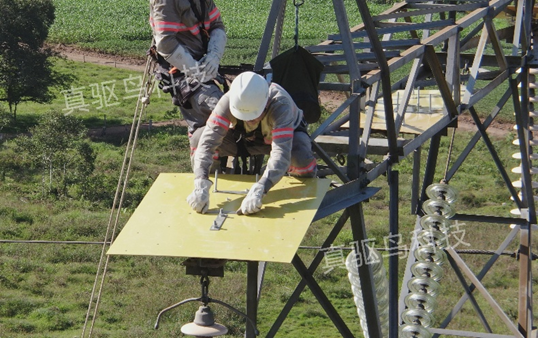
Currently, commonly used power-isolating bird-proof baffles are manufactured from high-strength epoxy resin insulating panels. This material offers excellent insulating properties, effectively preventing flashover incidents, while also providing high voltage resistance, wear resistance, and heat resistance, enabling it to withstand thermal aging and salt fog corrosion in long-term outdoor environments. Baffle dimensions can be custom-designed to fit different tower structures, ensuring a tight seal. For mounting, L-shaped brackets are used to secure the baffles directly to the tower, preventing loosening or displacement and eliminating the need for frequent maintenance even during long-term operation.
It is worth noting that these barriers do not interfere with the birds’ normal activities. Birds can still rest, forage, and breed near the transmission towers; they are simply guided to relatively safe areas, thereby reducing the risk of electrocution. In other words, this approach both safeguards the reliability of the power supply and minimizes disruption to wild birds, striking a balance between human and avian interests.
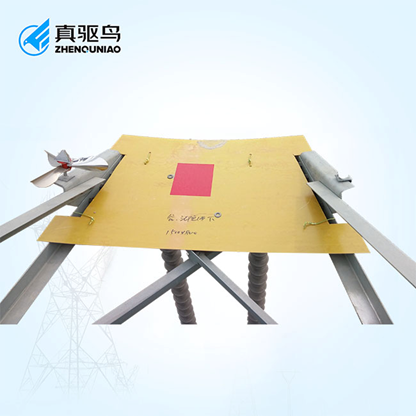
In practice, after installing insulated bird-proof baffles in sections prone to bird-related incidents, the number of circuit breaker trips caused by bird activity has decreased significantly. The devices feature a simple design, are easy to install, and require minimal maintenance, making them suitable for phased deployment on key transmission lines. For transmission lines that have long been plagued by bird-line collisions, this is undoubtedly a practical and effective solution.


