


Along the vast corridors of power transmission lines, towering utility poles not only serve as the backbone supporting energy transmission but are also often viewed by birds as prime nesting and roosting sites. However, this ecological coincidence poses a serious challenge to power safety. During the bird breeding season, nesting materials such as dead branches and wire falling from nests often cause electrical short circuits. To address this challenge, Shenzhen Zhenqu Bird Technology’s ZQN-DL-ZWbird deterrent device employs ingenious physical logic to resolve the “nesting crisis” at its source.
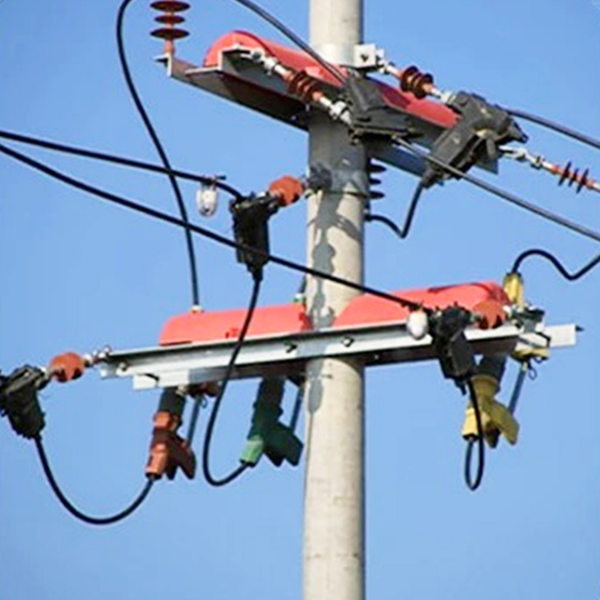
The core principle of bird deterrent devices lies in the absolute occupation of physical space. Birds are extremely selective about nesting sites and typically choose locations above the connection points between tower crossarms and insulator strings, as these areas offer structural stability and unobstructed views. By pre-installing these devices at these critical junctions, the physical surface characteristics of the tower can be altered. When birds attempt to land or place their first twig, the deterrent makes them feel there is “no place to stand”—either because the spikes prevent them from gaining a firm footing, or because the smooth panels prevent them from securing nesting materials. This “first-come, first-served” physical occupation forcibly eliminates the initial conditions necessary for nest-building.
Beyond simply "occupying space," the bird deterrent serves as a sophisticated "electrical safety barrier." The root cause of tripped circuit breakers at the Bird's Nest lies in the violation of electrical safety clearances. If damp branches or pieces of metal wire fall from a height, they act like conductors, bridging the gap between high-voltage live parts and the grounded tower structure. Made of insulating materials, the nest preventer features a wide-rimmed design that deflects nest debris caused by gravity or strong winds outward, ensuring its fall trajectory avoids the insulator strings below. This maintains the air insulation strength between the high-voltage electric field and the ground, thereby reducing the probability of flashover and circuit breaker tripping.
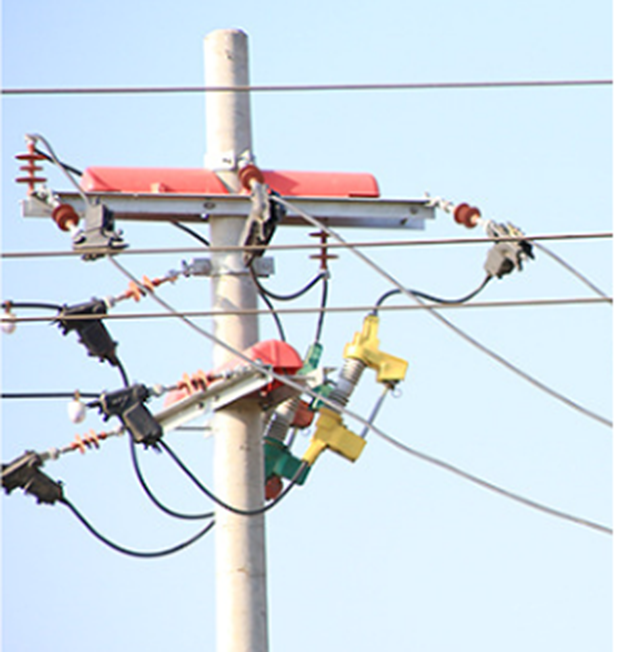
Shenzhen Zhenqu Bird Technology’s design of these bird deterrents embodies the ecological wisdom of “combining prevention with mitigation.” Rather than blindly installing barriers across the entire tower, the power utility precisely targets “high-risk areas” such as the space above insulators and critical points at the top of the tower. This localized placement effectively serves as behavioral guidance: it forces birds to abandon dangerous locations that could threaten power grid operations, directing them instead to nest in non-energized components in the middle and lower sections of the towers or in natural vegetation. This not only safeguards the stable operation of the power system but also prevents birds from being electrocuted by accidental contact with high-voltage lines, achieving a win-win outcome for both power grid operations and biodiversity conservation.
In summary, power line pole occupiers are not merely physical barriers; they embody a shift in the approach to power grid management from “post-disaster repairs” to “preemptive prevention.” By leveraging simple physical principles, they establish a clear boundary in complex electromagnetic environments. Through scientific and rational “spatial occupation,” these occupiers effectively mitigate the safety hazards posed by bird nesting, thereby erecting a robust aerial defense line for modern power grids.


