


Driven by the "dual carbon" strategy, solar power plants have sprung up like mushrooms after rain, covering deserts, mountains, and rooftops. However, these glistening arrays of silicon wafers serve as ideal resting and defecation spots for birds. Such natural behavior is becoming a major obstacle to solar power generation efficiency and a significant contributor to plant losses.
Because bird droppings are highly adhesive, they form an opaque layer once they dry and harden. While a single spot of blockage may seem minor, it disrupts the electrical balance of the string, causing a sharp drop in power output. Furthermore, bird droppings are highly acidic or alkaline; if left on the surface for an extended period, they can corrode the coating on the tempered glass of the photovoltaic modules, resulting in permanent damage to light transmittance and shortening the modules’ lifespan.
Even more critical is the hot-spot effect: solar cells obscured by bird droppings transform from power sources into energy-consuming loads, causing local temperatures to rise sharply. This extreme temperature difference not only burns through the encapsulant but can also cause modules to rupture or even trigger fires, threatening the safety of the entire power plant’s assets.
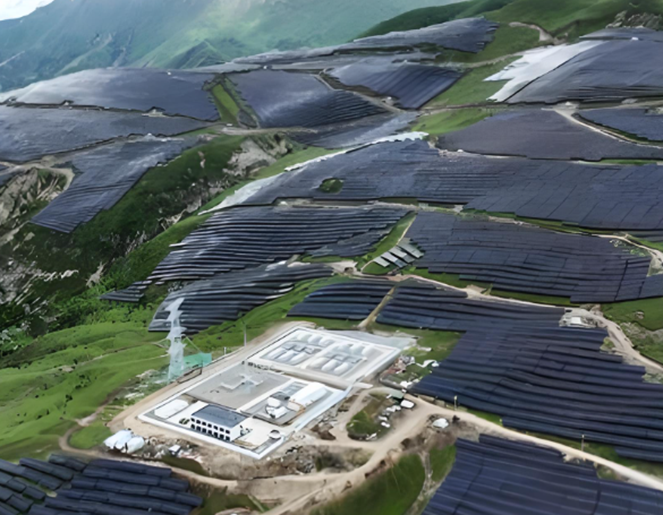
To address this long-standing industry challenge, Shenzhen Zhenquniao Technology has launched the PV Power Plant Bird Deterrent System. As a new-generation intelligent integrated bird deterrent system, it employs multi-dimensional, coordinated technologies to provide PV power plants with a highly efficient and eco-friendly safety shield.
The comprehensive bird deterrent system developed by Shenzhen Zhenqu Bird Technology integrates four core technologies—laser, focused high-intensity sound, strobe lighting, and ultrasound—to comprehensively target birds’ visual, auditory, and nervous systems. The emitted 532nm green laser beam simulates a rapidly approaching physical threat. Birds perceive it as a predator or a lethal obstacle, triggering an instinctive avoidance and flight response.
The system also features a variety of built-in sounds, including those of natural predators, the distress calls of other birds, and high-decibel bursts. These sudden sound pulses instantly shatter the silence, causing birds to feel extreme insecurity. Targeting the specific auditory frequency range of birds, the device can also emit high-power variable-frequency ultrasonic waves. While inaudible to humans, these sounds induce physiological agitation and discomfort in birds. Additionally, high-frequency strobe lights instantly startle flocks attempting to roost, completely deterring them from settling.
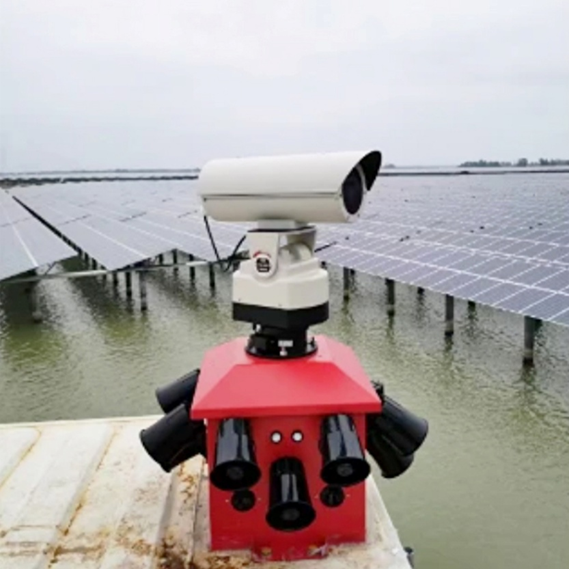
This cyclical alternation and random combination of multiple technical measures keeps both the alert magpies and the stubborn sparrows at bay from the solar panel area.
Photovoltaic power generation is a green initiative that harnesses the power of nature, and smart bird deterrent systems are essential equipment for ensuring the smooth conversion of this green energy. Through the power of technology, we no longer rely on harmful methods; instead, we use intelligent sensory interference to establish a clear boundary between solar arrays and birds!


